Tag Archives: Social Impact

On CK Prahalad and his impact on social entrepreneurship

I, like many others, was saddened to hear of the untimely passing away of Prof. C. K. Prahalad. His career spanned over three decades during which time he introduced several innovative business ideas that quickly became mainstream. He was one of the first to identify ‘core competencies’ of a business and relate it to a company’s competitive advantage. His next book introduced the concept of ‘co-creation’ where corporations engaged their customers in creating joint value. It influenced many of the approaches used by companies in the 2000s to get their customers to co-design products.

Perhaps his most widely influential work was his last book on “The Fortune at the Bottom of the Pyramid: Eradicating Poverty through profits”. In it he outlined his take on how corporations could profitably service the very large market that consists of the bottommost economic strata. While the affluent tip of the global economic pyramid consists of less than 100 million people who make over $20,000 a year, there are over 2 to 2.5 Billion people who live on less than $2 a day. Yet these markets at the bottom of the economic pyramid also have needs and wants. By properly designing products and delivery mechanisms to satisfy this segment of the consumer population, he showed how companies could make money while helping this social segment.

His Bottom of the Pyramid or BOP approach quickly caught on and today a range of multinationals are focused on creating solutions that are targeting this market segment. Examples of these include Hindustan Lever, Godrej and GE Healthcare. His philosophy that even the poorest segment had a real market need and were a viable market has helped redirect corporate strategies and will have significant impact across the globe.

CK Prahalad has been honored for his work around the world including most recently being awarded the Padma Bhushan, one of the highest civilian honors, by the Indian Government. The world will miss this strategic thinker but his legacy will continue to improve the quality of life for millions subsisting at the bottom of the pyramid. 

You can read an earlier piece I wrote about his work on my blog at “Designing for the bottom of the pyramid”.
Assured Labor – creating a mobile marketplace for jobs in emerging markets

In the fall of 2007, a group of young potential entrepreneurs attending the course on Development Entrepreneurship at MIT struggled with a problem facing over half the developing world. As developing economies grew and provided new jobs, the infrastructure to communicate and broadcast the potential opportunities for employment was unable to keep up. The influx of migrant workers into urbanized centers provided a rich pool of available talent but the mechanisms for disseminating job needs were still rooted in the 19th century. Print advertising and, in extreme cases, roving cars with loudspeakers, were used in a scattershot manner hoping to attract potential candidates to interview for jobs. Online advertising wasn’t an option in most developing countries where internet connectivity was sporadic. The transient nature of most migrant and casual laborers made getting to the target audience even more difficult. Continue reading

Launching the Go-To networking event for Social Entrepreneurs in Boston

Last month over 30 people from diverse backgrounds, but with a common interest in supporting organizations making significant social impact, gathered at Tantric India Bistro in Boston for the first monthly meeting jointly hosted by Tantric, TIE Social Entrepreneurs Group and NetSAP Boston. The TIE Social Entrepreneurs Group’s mission is to create a supportive peer-network of thought leaders, entrepreneurs, non-profit and business professionals dedicated to effective social impact. TIE Social Entrepreneurs Group working together with Mary Sen, proprietor of Tantric and a staunch supporter of social causes, and NETSAP, the Network of South Asian Professionals, hopes to make the First Monday of the Month at Tantric as the “Go To” networking venue for people interested in meeting other folks with a similar interest in organizations creating innovative social impact. Continue reading

Help select a winning teen social entrepreneur

Ashoka Youth Venture and Best Buy Children’s Foundation have teamed up to create the @15 Community Impact Challenge. Ashoka is known around the world as the institution that coined the term social entrepreneurship and has been actively supporting social entrepreneurs for nearly 30 years. Ashoka’s Youth Venture works to encourage this spirit of innovation and social entrepreneurship in young people. With Ashoka’s Youth Venture’s support youngsters design and launch their own social ventures to target social issues and challenges.

The Best Buy Children’s Foundation hopes to empower teens at the most critical time of their lives – early adolescence. Its @15 programs provide teens with a platform to affect social change. @15 working together with Ashoka’s Youth Venture has created the Community Impact Challenge. Youth teams from around the nation applied to enter the competition. A set of 15 finalists was chosen based on an assessment of their potential for community impact and a vision of how they would create sustainable change. Continue reading

Akanksha – engaging children in education

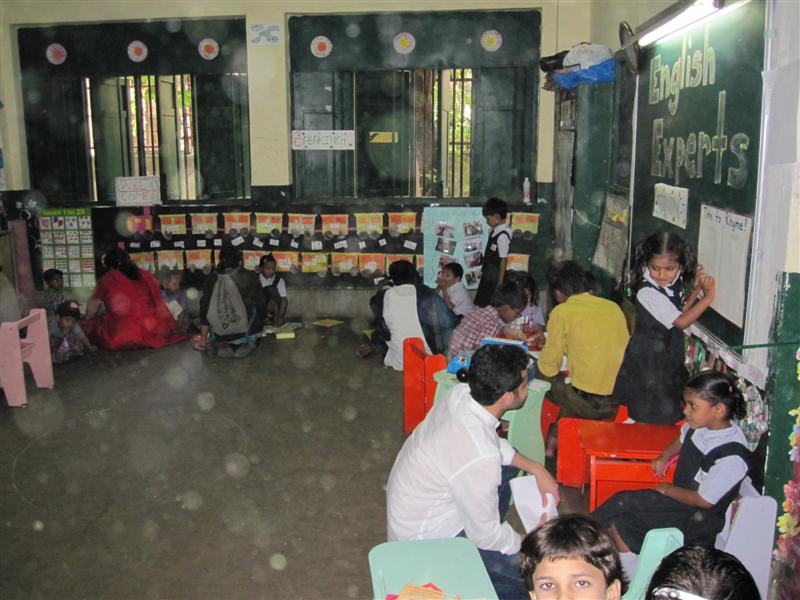
Akanksha Classroom

Typical Akanksha Classroom

Last year we had the chance to host Vandana Goyal and Ruchika Gupta from Akanksha when they visited Boston. Over the years we had heard of the wonderful work this NGO had been doing in India and it was great to hear about their plans for expansion when they presented to a small group of interested folks at MIT. When we decided to visit India around December, we made sure that we had set aside some time to visit Akanksha at one of their facilities.    

Twenty years ago, the first Akanksha center opened for children from the slum communities of Mumbai, an innovative after school program designed to provide them with fun, engaging learning opportunities. Founded by Shaheen Mistri at the age of 18, these centers develop children’s English language fluency as well as equip them to go on to college, attain a good job and become change agents in their communities. Today, over 80% of Akanksha children go on to college to begin professional careers compared to only 30% of Indian children who successfully complete the 10th grade.     Continue reading