Category Archives: Social Ecosystem

Vijay Mahajan of BASIX on risks and results in microfinance

A good article that touches on some of the issues in my last post is a recent interview of Vijay Mahajan on the Credit Suisse website. In the interview Mr. Mahajan points out to some of the prerequisites for microfinance to pull people out of poverty. He also highlights the need to match investment growth in this sector to the available management capacity in order to avoid a bubble in the sector. Here are some extracts from his interview. Continue reading
Grameen and Continuum partner to address talent gap in microfinance

Last week I had the opportunity to attend a panel discussion at Continuum, the design consultancy based in Newton, Massachusetts, on “Building Leadership in the Microfinance Sector.” Moderated by Ed Milano from Continuum, the panel consisted of a cross functional team that was studying the issue of talent acquisition and management in the microfinance sector and consisted of Peg Ross, Director of the Human Capital Center at the Grameen Foundation; Lyndon Rego, Director of the Innovation Incubator at the  Center for Creative Leadership; Lynn Pikholz, President of Shorecap Exchange; and Anna Muoio, Principal with the Social Innovation practice at Continuum.

The presentation and discussion centered around some very preliminary findings based on an initial field immersion trip and set the stage for  more detailed field research to be conducted later this year. I have outlined some of the observations that were shared at the meeting and my personal observations and reactions to what I heard. Continue reading

Launching the Go-To networking event for Social Entrepreneurs in Boston

Last month over 30 people from diverse backgrounds, but with a common interest in supporting organizations making significant social impact, gathered at Tantric India Bistro in Boston for the first monthly meeting jointly hosted by Tantric, TIE Social Entrepreneurs Group and NetSAP Boston. The TIE Social Entrepreneurs Group’s mission is to create a supportive peer-network of thought leaders, entrepreneurs, non-profit and business professionals dedicated to effective social impact. TIE Social Entrepreneurs Group working together with Mary Sen, proprietor of Tantric and a staunch supporter of social causes, and NETSAP, the Network of South Asian Professionals, hopes to make the First Monday of the Month at Tantric as the “Go To” networking venue for people interested in meeting other folks with a similar interest in organizations creating innovative social impact. Continue reading

Akanksha – engaging children in education

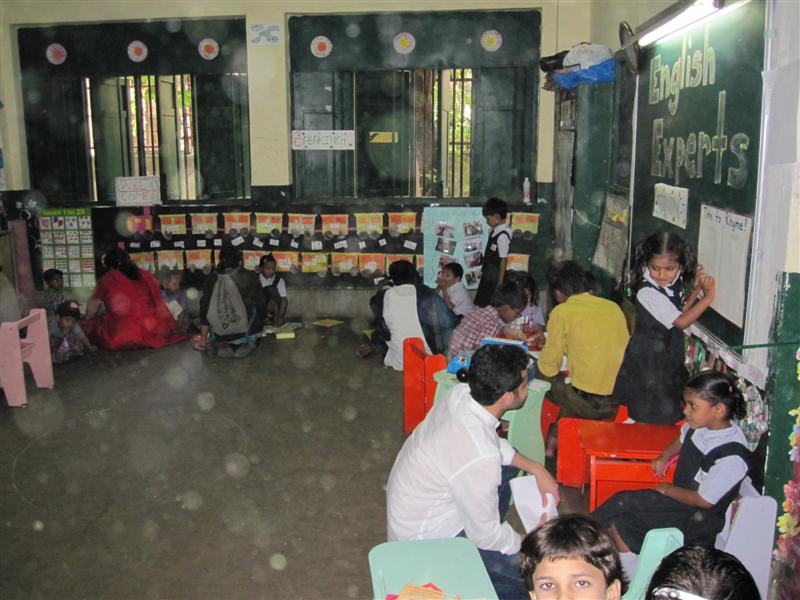
Akanksha Classroom

Typical Akanksha Classroom

Last year we had the chance to host Vandana Goyal and Ruchika Gupta from Akanksha when they visited Boston. Over the years we had heard of the wonderful work this NGO had been doing in India and it was great to hear about their plans for expansion when they presented to a small group of interested folks at MIT. When we decided to visit India around December, we made sure that we had set aside some time to visit Akanksha at one of their facilities.    

Twenty years ago, the first Akanksha center opened for children from the slum communities of Mumbai, an innovative after school program designed to provide them with fun, engaging learning opportunities. Founded by Shaheen Mistri at the age of 18, these centers develop children’s English language fluency as well as equip them to go on to college, attain a good job and become change agents in their communities. Today, over 80% of Akanksha children go on to college to begin professional careers compared to only 30% of Indian children who successfully complete the 10th grade.     Continue reading

Some reflections on Martin Luther King and non-profit leadership

Yesterday I had the opportunity to volunteer with a group at the Greater Boston Food Bank. After spending some time on the production line, and given the past weekend celebrating Martin Luther King, the group was asked to reflect on what Martin Luther King might have done in light of what we had seen and experienced, at the Greater Boston Food Bank as well as the larger set of social issues that we are exposed to in our daily lives. Continue reading